Santa Claus is on his way! Make sure he knows what you want for your next cycling season. Here are some ideas to improve the quality of training, suitable for beginners to extremely enthusiastic cyclists.
1. Make sure your bike is properly fit for your body characteristics and your needs. Professional Bike Fitting are offered by bike shops or specialists in exercise, movement and body assessment like physiotherapists and exercise physiologists. The prices vary considerably so it is worthwhile to shop around and find was is available in your area. I would definitely recommend to use a specialised resource that will assess not only your length to positioned the saddle and the handlebar, but that will take into account your flexibility, strength, posture, etc. It should also include a dynamic fitting to make sure your cycling stroke are smooth and efficient. The best time to modify your position on the bike is the off season period if you are a competitive rider or as soon as possible if you change bike which can have a different frame geometry and affect your fitting.
2. Record all the data you want from your rides with a Bike GPS, heart rate monitor, cadence and speed sensors, and power meter. With the big range of devices available at the moment, it is important to know which option you want and what data you want to collect: distance, elevation, speed, cadence, power, heart rate? Some devices, like the Garmin Edge 510, have different map options and offers the possibility to load a course which is helpful when riding in new area. The most expensive GPS are tiny computers that have real map like the Garmin Edge 1000. A good advice is to make sure your device is “ANT+” which enables you to connect any “ANT+” sensor your GPS can handle. Garmin recently released new wireless Speed and Cadence Sensors that are quite compact and do not require magnet. They easily fit on the crank arm and the hub of the wheel to give accurate cadence and speed whether your riding outdoor or indoor. On the other hand, if you have a smartphone and just want to record distance, speed and elevation, free apps are available like Strava and Map My Ride.
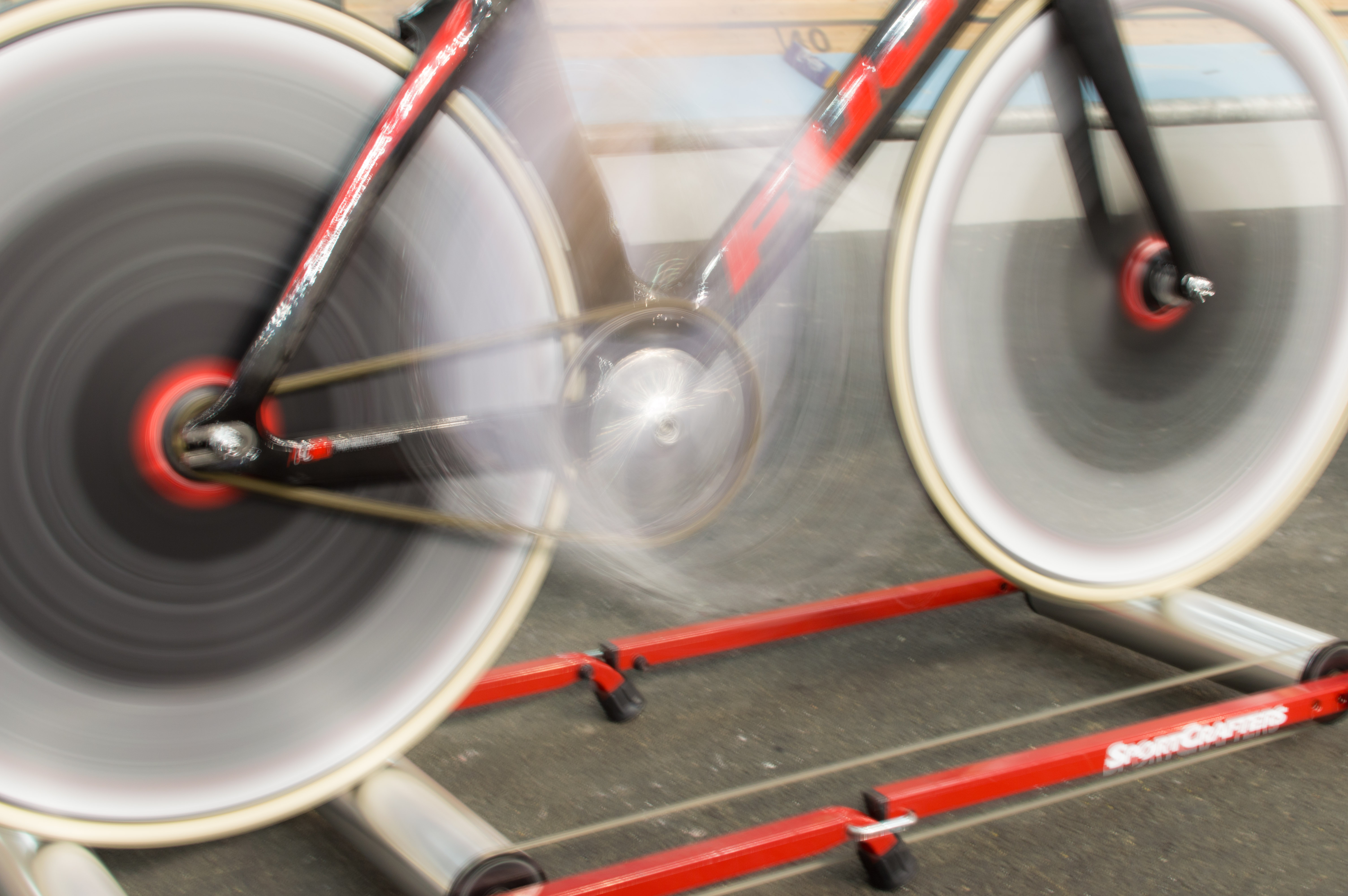
Spinning on the rollers
3. For those days when the weather gets out of control or you just don’t want your ride to feel like a punishment with the rain, the cold and the wind; but you still want to get your legs moving, the Trainer or Rollers are a good option to train indoor. One or the other will be more appropriate according to your needs. If you aim easy to moderately intense ride and want to improve your bike skills, control and balance, the rollers are a good option. If you want to do more intensity and intervals or if your bike skills and balance are not excellent, the trainer is a better option. With the back wheel safely fixed to the trainer, there is no chance of fall and you can vary the intensity to get a good intense workout. If you already have a trainer or rollers, there is a growing variety of Spinning Videos and Motivation Videos that can make your indoor session more enjoyable (See an example below). Some rollers are now also available with resistance but they are a lot more expensive.
With all those ideas to improve the quality of your training, just keep in mind that they are all useless unless you get on your bike and use them…
Enjoy your ride and your new gadgets.
 The Body and The Bike